MDDN 241

MDDN 243

CCDN 271

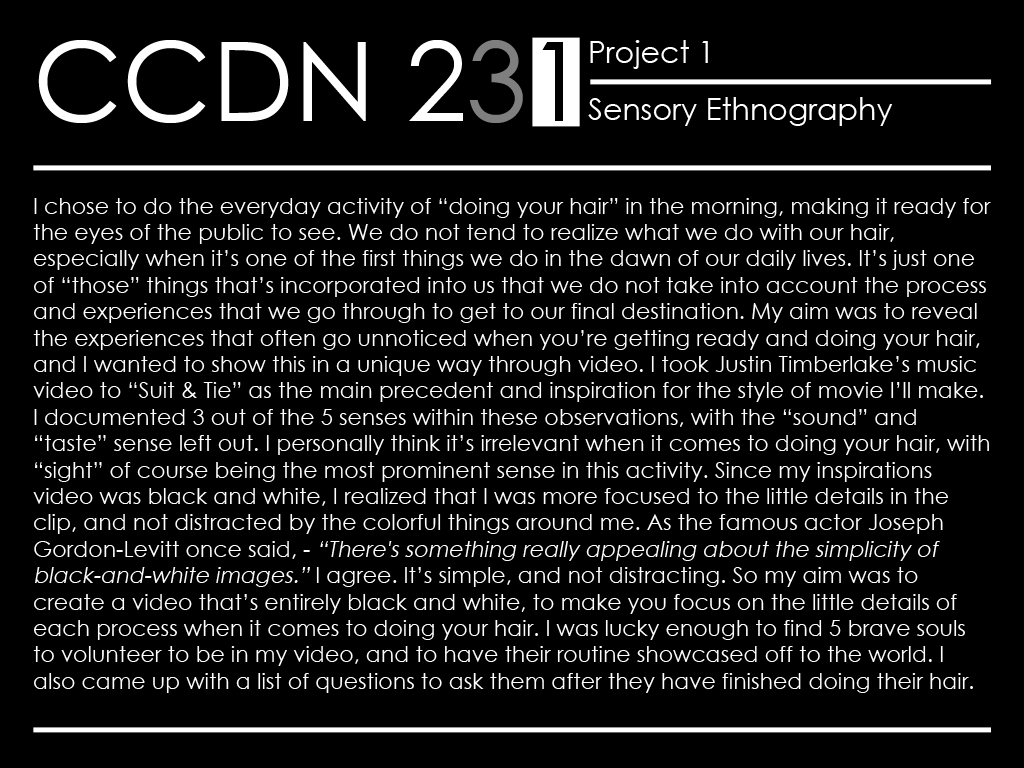
CCDN 231

Showing posts with label hand_in. Show all posts

Friday, 1 November 2013

MDDN 243


Introduction To Computer Game Design

Project 3: Symbiosis

Finalised, feedback, thoughts and other things..

Week 1-6:

Group work sessions attended out of 4

Jay 4
Ethan 4
Tamati 1
Tammy 1


Week 7-8:

Group work sessions attended out of 3

Jay 3
Ethan 3
Tamati 1
Tammy 0


Week 8-10:

Group work sessions attended out of 3

Jay 3
Ethan 3
Tamati 2
Tammy 0

As you can see from the meetings and group sessions we had, Ethan and I were there every single time. I was really disappointed that one person from our group did not show up at all and contributed nothing to our game. Tamati our group leader had created good maps in the end and I'd have to say makes up for his contribution and absence during the first 6-8 weeks of this project. Ethan by far has been the most helpful person during this whole experience, since him and myself were always the ones cracking down on the game every single night that we were at my place. He has done well with the coding as it was his first time using Stencyl as well, and was glad that he was in the team with myself to create a game that we had finished in the end on time.

Thursday, 12 September 2013

CCDN 231

Experimental Design Ideas

Project 2: Sensory/Emotion Experiment

Final Video


CCDN 231

Experimental Design Ideas

Project Two: Sensory/Emotion Experiment

Rationale and Final Presentation


Wednesday, 21 August 2013

MDDN 243

Introduction to Computer Game Design

Project Two: Prototype


This is the final game prototype that I have created using Stencyl. Unfortunately, it wouldn't let me publish my game which was definitely a let down, so I decide to create a video documenting myself play the game and show it's main mechanics. The game is called Bunz's Quest. It's about a bunny who gets his family captured by evil poachers, and his mission is to save them. This game has a similar style to Mario but incorporates problem solving as well where the player needs to think about which jumps they need to do. The basic mechanics is walking with jumping as the main mechanic of the game. 


Wednesday, 14 August 2013

CCDN 231

Experimental Design Ideas

Project One: Sensory Ethnography

Final Video


CCDN 231

Experimental Design Ideas

Project One: Sensory Ethnography

Final Findings Slide


Wednesday, 31 July 2013

CCDN 231

Experimental Design Ideas

Project One: Sensory Ethnography

Powerpoint Slides


CCDN 231

Experimental Design Ideas

Project One: Sensory Ethnography

For this project I had to observe, document and analyse my own sensory experience for 3 everyday activities, with the reveal of the experiences that often go unnoticed. My proposal is that I will look into the activities that I do every morning, so I know in and out the actions that I do on a regularly basis. This will help me reveal the sensory experiences that I don't take into accounted for. 

The first activity that I analysed was the very first thing that I do in the morning after I wake up and that's check what's going on in my social life. It's become a habit these days and I thought I'd look into it more deeply. I wanted to analyse the activity of typing, and to compare the differences between typing using my computer, and typing out a text on my phone. Here's what I came up with:

Typing on my computer:

I, like most people are often on their computer either doing work, or simply just rummaging around checking our Facebook and talking to friends. Whilst we're doing this, we don't take into account that we are constantly typing (wow I just realised that I'm typing right now). Every keyboard has a different feel to it but once you've used it enough, it becomes part of you. Instead of paying attention to what was happening on the screen, I glanced down lower to consider the sensory experiences I was having with this 68-key keyboard right in front of me. The first thing I noticed was the unique sound of the keys being pressed over and over and over and (you get the point) over again. Most of the keys sounded exactly the same, except for one that stood out more than the rest.. Yes that would be the space bar. It was flattering. Another sensory experience I had with typing on the computer was the feel to it. Although the letters "F" and "J" have unique bumps to it to aid people to type without looking at the screen, it only just crossed my mind that this was happening. That I could feel these bumps all the time but just didn't take it into account. The last sensory experience I had was that I noticed that I kept looking down to make sure I was typing correctly, call me a rookie but we (most of us) do it. 
For the second part of this activity, I used my phone to type instead of the keyboard. Me having an iPhone 5, it is fully touch screen and if my phone is on silent (which it always is), I don't really get any sensory experiences with it that are unique, it's smooth to touch, the only sound it makes is my fingers tapping on the screen which is equivalent to a fish farting in the ocean. 

Cooking Breakfast:

The second activity that I love to do in the morning is to cook breakfast. The day I chose to document this activity I happened to have sausages. I thought wow, this would be a good idea! And it was, and it was tasty. The process however was quite slow but the very first thing I noticed was that I got oil on my hands. This feeling really does suck as oil is a pain in the butt to wash off. It made my fingers all shiny as well. Moving past that the next part was turning the over top on. This was exciting as to when I turned it on, it made a random sound that sounds like I had just ignited something. Like it was ready for the sausages, and the sausages were indeed ready for it. With the tensions running high, I placed the sausages on the frying pan and my senses tingled. I heard the sizzle from the oil and water scorch away, the strong meaty smell whiffs in my nostrils, the savagely hot oil scalding my skin as it flares my eyes. And all of a sudden, out of no where..the toast jumps up like a kangaroo playing Marco Polo in a field of wheat. It scared the crap out of me! When the sausages were done and placed nicely on the toast, i grabbed the tomato sauce and shook it. I heard the almost empty bottle splash its content around with the weight changing between the shake of my wrist. I opened the cap *POP* and squeezed it like my life depended on it. Now this is where I had to go look at myself in the mirror. No matter what age you are, or how mature you are,  the sound of an empty bottle farting is hilarious! I couldn't help but laugh as it extracted itself from the plastic bottle.

My um..Hair:

So I was pondering on ideas on what to do for my last activity that I do every morning. And I had to do it. My hair. First step is to twist the tub of goodness open, feeling that old sticky and stuck feeling of an old container trying to restrain itself from letting me open it. I dipped my finger inside it's sticky self, smelling the combination of the cherry and rose aroma, slowly spreading it all over my hands as the friction between them picked up. I looked at myself in the mirror, and said yes, I am ready. I spread my hands over my short and straight hair like I was patting a Lion for the first time, carefully and surely. I heard my hands twisting my hair as it thickened to a better shape. By this time the scent got so strong that I could almost taste the cherry blossoms on my tongue, as I parted my way through my hair to make it as perfect as I can. With a few final touches I noticed that my hair had now gone hard and spiky, as it prickled me while I played with it. I stopped, looked at my reflection and smiled. I turned the tap on and it made a rusty crooked sound like it needed oil, once again restraining itself from my forceful pull. The water blasted and splashed my feeling the cold wetness of the temperature. The sound was eradicating, blasting my ears away like a Pokemon using a special move. I ran my hands over the cold water shivering slightly, as I rubbed them together to wash off the remains of the hair product. The smell slowly started to go away and my nostrils tingled with cleanness. I shook my hands and heard the water slap the side of the sink. I was ready.

Sunday, 28 July 2013

MDDN 243

Introduction to Computer Game Design

Project One: Variations

Presentation Slides


Thursday, 13 June 2013

CCDN 271


Assignment 5
Research Paper


“Expensive and branded everyday things are requirements”


“...the blue jeans with the prominent Levi’s rivets, the watch with the hey-this-certifies-I-made-it icon on the face, your fountain pen with the makers symbol crafted into the end...Regardless of age, regardless of position, regardless of the business we happen to be in, all of us need to understand the importance of branding.” (Peters, 1997). 

As the generation of teenagers and adults grow, so does the material world among us. We are offered with an increasingly higher number of “branded” everyday things today, than we ever have been before. Our desires are not that of a simple everyday object. We do not seek for cheap and economical products, but would rather pursue the likes of an expensive branded trademark. By researching the two intersecting themes of “everyday design” and “Design and Anthropology”, this research paper will explore the psychology of teenagers when buying and selling, in order to discover how simple everyday things need to be “labelled” to bring satisfaction to this day and age. The argument will be that in looking at our young generation’s needs, rather than wants, expensive and branded everyday things are requirements in this new generation. This claim will be backed up by 3 main supporting paragraphs. The first step to supporting this claim, is to build a solid foundation for this research paper. The perfect way to do that is to introduce the first topic which is brands within clothing. The second step is to relate it to our modern day technology. The last step will be to describe the different rituals and intimacies with our everyday things. After showcasing all the supporting topics, we then reach the conclusion to some up the claim for this paper.

Before starting this research paper, firstly we must know our basic terms for it. We need to clarify and describe such words to make it more clear and understandable. One of the main terms being used will be the word “brand”. What is a brand? How is it going to be used in this research paper? Brand is the name, term, design, symbol, or any other feature that identifies one seller's product distinct from those of other sellers. It is also “...a relationship that is personified either by the company’s name or by the brand name of the product itself” (Chernatony, 2011, p. 16). 
The next term to be defined is the word “generation”. For this research paper, social generation will be the main idea used when talking about the current generation. Our current generation of young adults and teenagers were born in the same data range and share similar cultural experiences. 

To build the foundation to the claim that our generation’s needs are branded everyday things, the first supporting topic will be about brands within clothing. Every young adult and teenager needs clothes, it’s simply a must, want and need for the society we live in today. Alissa Quart explains this and analyzes it in her book Branded: The Buying and Selling of Teenagers. The main point of this paragraph is to explain the logic and psychology of this generation when it comes to shopping for clothes and other things such as shoes, jewelry, perfumes and colognes, which is where Quart’s book comes in handy. She starts off by talking about how back in her “day”, the teens of her age were all separated due to such things like differentiation, fitting in with a group or even distinguishing one’s identity. But the adolescence has well been transformed since then, she labels the change “radically” (pg. 3). She says that “The reliance on brands has shifted: brands have infiltrated preteens and adolescents’ inner lives.” (pg. 4). We hear her comment and most of us would brush it off and not even think any of it, but once you stop and pay attention to this important matter she raises, it does make a lot of sense. Brands are now inside all of us, day in and out. We all have our favorite brands. Brands that we don’t even have to see the name of and just the logo. Our minds just instantly whisper the words of the name. With clothing, it works exactly the same way. We all have our own style no matter what kind of person we are, but with style comes brands. Quart personally points her finger at the advertising industry, as the main cause of how the generation has turned out the way it has today. “Todays teens are victims of the contemporary luxury economy. They have grown up in the age of the brand, bombarded and defined by name products and intrusive and clever advertising strategies.” (2003, pg. xvi). With the “now even more” refined teen marketing and its language, it now resembles youth sociology and psychology. With the heightened body consciousness between both genders, advertisers saw this as an opportunity. Mainly targeting teenage girls, advertisements now paint pictures of what they should look like. The clothing company Abercrombie & Fitch’s ad agency “blithely” told Women’s Wear Daily that teens “love sexy bodies and they’re more conscious of that than ever.” (pg. 10). This is coming from the brand that produced catalogs of underdressed jocks and porn stars wearing the omnipresent branded underwear.  The clear message was that when you and your partner drop trousers it had better be expensive underwear, which must have the legible letters of a good brand. If not you’ll never get the sexy boy or girl to date you. This is a good example to why clothing brands are important to teenagers and young adults because of their self conscious images of themselves, and the advertising industry within the brands are the ones that are doing that. Quart in her book labels this as “Selling Adulthood”.

Leading on from the brands within the clothing, leads on to the technology side of brands. Due to marketingcharts.com, they conducted a research with 1000+ kids aged between 13 and 19 of mixed genders with a survey about brands. It resulted that 46% say “they are loyal to the brands they really like” (2007). The study consisted of brands such as Apple which resulted in the brand Apple being “absolutely essential to teens”. In Chernatony’s book Creating Powerful Brands, he writes about why it is crucial to have powerful brands worldwide and states that brands are and “estimated to represent at least 20% of the intangible value of businesses on the major world stock markets.” (2001, pg 8). Ever since then, the numbers have risen tremendously. Some of the most powerful brands in the world that deal with technology we already know are Microsoft, Samsung and of course Apple. What do these major brands have in common? Cell phones. How does this relate to our generation of youth? We all have one. It’s a common sight, teenagers never look up, always glued to their cell phones the majority of the day. The survey of youth from the age of 12 through to 17 found that 78% have a cell phone, with nearly half of those being smartphones (pewinternet.org). Another survey was also conducted overtime about gadget ownership with American adults from the age of 18 and over. A spreadsheet done by Pew Internet (see FIG. 1) we can see immediately that cell phones have the highest percentage of ownership than any other gadgets. From 73% in April 2006 to 91% in May 2013. 


“Text messages may seem like the major culprit for this behavior, but a new report shows that one in four teens use cell phones as their device of choice when browsing the web.” (Bautista, 2013). The cell phones in this generation are indeed mostly smartphones with complete access to the internet. 25% of the people own an Apple iPhone which leads the race, followed by an only 4% for Blackberry (pewinternet.org). As we can see from the statistics provided, cell phones are the most popular gadgets used from the age 12 to the young adults, with the Apple iPhone being the most owned out of all the brands. It is an icon, one that almost any teenager and young adult could dream of having. It differentiates itself from all other brands because of the image Apple has painted that it is the perfect phone to have. It has everything a person from this generation needs, from the camera to the internet and social capabilities. This brand has definitely made a name for itself. 

The last paragraph leads on from brands within technology, and furthermore explains the rituals and intimacy we teens and young adults have with our beloved and branded everyday things. Tom Chatfield wrote an article for Aeon Magazine called Cyborg dreams with his opening statement as “Gadgets are the first thing we touch in the morning and the last thing we stroke at night. We are their slaves” (2013). Just like Quart’s quotes, this is inspiring and mind blowing. The more we think about it, most of us touch our cell phones last before we go to sleep at night, and the first thing we touch when we wake up in the morning. This is both a ritual and and intimate relationship we have with the everyday object. But it is the brand that makes it how it is today. If we take the Apple’s iPhone as a fine example, it’s capabilities are far more vast than the mind can think. This unique brand allows users to download apps, including games which immediately forms an intimate relationship with the youth of this generation. Even something as small as an alarm clock, or even checking the time  requires us to touch our cell phones and abled devices for the first and last thing of our daily lives. It becomes a habit, a ritual. Another example of an intimate relationship with everyday brands are the comparison between branded clothing and non-branded clothing. If we take a pair of jeans made by a very popular brand like Levi’s, and another pair of jeans with a brand like Hallensteins that is half the price and gave it to a teen of this generation, it’s obvious to what the intimate relationship that person will have with those pairs of jeans. With Levi’s being the more popular brand and more expensive, the way this generation works is that we would be more closely intimate to it therefore we would look after it more than the Hallensteins brand. This works the same with cell phones. If someone of this generation of youth had 2 cell phones, one that was your normal average Nokia worth let’s say $299 on the market and an iPhone 5 worth $1029 on the market, it would be easy to tell which one they would have a more intimate and close relationship to. 

From underwear to cell phones, teenagers and young adults have to own branded things. It’s in our generation’s daily lives, there’s no getting away from it. Branded clothing companies target the youth of today especially girls with their self consciousness through advertising to get inside their heads. They sell “adulthood” and force us to get branded clothing to fit in, and become attractable and “sexy” for the opposite sex to want us. That is the common image for branded clothing in this generation. On the other side of the branded industry, is the technology brands that sell us cell phones where they paint the picture that cell phones are needed in our lives. Which they are. Cell phones that are branded like Apple’s iPhone which have apps give us easy access to texting, internet and social interactions with others which is how this current generation works, by being “glued” to our gadgets. Lastly this is all explained on the rituals we have and the intimacy we have for our branded things. The rituals where our iPhone’s are the first thing we touch in the morning and the last thing we “stroke” at night. The intimacy we have with our branded clothing like our pair of Levi’s jeans compared to our normal everyday and common pair. As you can see, the three supporting points in this research paper help defy and explain why expensive and branded everyday things are requirements in this new generation. 

“It's that simple -- and that hard. And that inescapable.” - (Peters, 1997).

Reference

Chernatony, L. D. (2011). Creating Powerful Brands (4th ed.).
     Oxford, UK: Butterworth-Heinemann. 

Quart, A. (2003). Branded: The Buying and Selling of Teenagers.
     New York, NY: Basic Books. 

Peters, T. (1997). The Brand Called You.
     Retrieved from http://www.fastcompany.com/28905/brand-called-you

Attfield, J. (2000). Wild Things: The Material Culture Of Everyday Life.
     New York, NY: Berg.

Teens Both Fickle about and Obsessed with Brands. (2007). Retrieved from
     http://www.marketingcharts.com/television/teens-both-fickle-about-and-obsessed-with-brands-698/

Palmer, J. (2012). The balinghou.
     Retrieved from http://www.aeonmagazine.com/living-together/james-palmer-chinese-youth/

Chatfield, T. (2013). Cyborg dreams.
     Retrieved from http://www.aeonmagazine.com/being-human/tom-chatfield-technology-intimacy/

Bautista, C. (2013). Cellphones: A Tenn’s Lifeline to the Internet.
     Retrieved from http://mashable.com/2013/03/13/teen-cellphone/

Brenner, J. (2013). Pew Internet: Mobile.
     Retrieved from http://pewinternet.org/Commentary/2012/February/Pew-Internet-Mobile.aspx

FIG. 1. Brenner, J. (2013). Pew Internet: Mobile.
     Retrieved from http://pewinternet.org/Commentary/2012/February/Pew-Internet-Mobile.aspx

Sunday, 7 April 2013

CCDN 271

Assignment 2

Identifying a Standpoint & Support


As my generation of teenagers and young adults grow, so does the material world among us. We are offered with an increasingly higher number of “branded” everyday things today, than we ever have been before. Our desires are not that of a simple everyday object. We do not seek for cheap and economical products but would rather pursue the likes of an expensive branded trademark. My research will include the psychology of teenagers when buying and selling, in order to discover how simple everyday things need to be “labelled” to bring satisfaction to this day and age. I will argue that in looking at my generation’s needs, rather than wants, expensive and branded everyday things are requirements in this generation. Beginning with Alissa Quart’s book Branded: The Buying and Selling of Teenagers, this study will provide me an overview of the “brand” design movement critiquing the initial periods when trademarks evolved. 
I nominate Design Sociology and Anthropology - Youth as my intersecting theme as I feel that the evolution of the trademarks on everyday design has influenced the behavior of teenagers and young adults to this day. The initial texts I will use for this is Creating Powerful Brands by Leslie de Chernatony and Quart’s Branded: The Buying and Selling of Teenagers.


Chernatony, L. D. (2011). Creating Powerful Brands (4th ed.).
Oxford, UK: Butterworth-Heinemann. Retrieved from 
http://books.google.co.nz/bookshl=en&lr=&id=TGb6c2oKqXIC&oi=fnd&pg=PR13&dq=teenagers+and+branded+labels&ots=2elGEmoyCI&sig=eda4SZyaVl9EYqyTAQoDZRVAT0Y#v=onepage&q=teenagers%20and%20branded%20labels&f=false

Quart, A. (2003). Branded: The Buying and Selling of Teenagers.
New York, NY: Basic Books. Retrieved from 
http://books.google.co.nz/bookshl=en&lr=&id=TGb6c2oKqXIC&oi=fnd&pg=PR13&dq=teenagers+and+branded+labels&ots=2elGEmoyCI&sig=eda4SZyaVl9EYqyTAQoDZRVAT0Y#v=onepage&q=teenagers%20and%20branded%20labels&f=false

Friday, 5 April 2013

MDDN 241

Project 1
Materiality

Final Movie

This is my very end result. It was a long road towards it through all the tutorials and videos I've had to watch to learn the programs through to all the rendering and finalising. But I'm glad it's finished, and I must say, I'm quite happy with what came out of it. Here is a list of the programs and resources I used to create this:

-- Autodesk Maya
-- Adobe After Effects CS5
-- iMovie
-- www.freesound.org
-- google.images

I couple of notes to take in, I added 2 effects to my movie in after effects which I thought would help the environmental factor within it. I added particles in the background, that look like stars which gradually appear and disappear but are noticeable if you pay attention. The effect looked cool because it gave it even a better 3D effect. The second one I used was the lens flare right after the big explosion. This effect looked too awesome and fit perfectly to the lighting that I did in my animation.


MDDN 241

Project 1
Materiality

Sound/Music

Below is the list of sounds and music that I chose for my animation. I wanted the sounds to be mystical and space-like and overall I think the sounds fit perfect with what I have created in my movie. I got all the music files from the open source sound website - www.freesound.org

--  "boom3" by NoiseCollector

-- "dead Verstorben" by UdoPohlmann

-- "Heartbeat 5sec int" by Benboncan

-- "Huge bomb" by jobro

-- "space buzz tone" by thatjeffcarter

MDDN 241

Project 1
Materiality

Poster

This is the A3 poster as part of our hand-in. We were required to make a poster that shows 3 different stages of our form and a brief description of it, also explaining where we got our ideas and inspiration from.


Monday, 18 March 2013

CCDN 271


Assignment One

Tools For Investigation - Assessing and Critiquing Sources


The Everyday

Michael Graves Designs: The Art of the Everyday Object is the inside account of Michael Graves one-man revolution. The acclaimed architect has elevated everyday objects from toasters to toilet brushes into enduring icons that have redefined how we look at them today. With his resounding successful work for Target Stores, Michael Graves has become a household name. Graves states that one of the most important characteristics of many of his projects is “domesticity”. Although he mentions that we flourish in surroundings that support our spiritual and physical needs, well designed products tell stories about the way we live and what we care about. He liked designing things that were efficient to use but at the same time, made everyday tasks more enjoyable through careful design and shapes and colors. Because what looks good often feels good, he developed stylish knobs and handles as an example, that fit well in our hands. Therefore the object and our body have a relationship with each other.

Patton, P. (2004). Michael Graves Designs: The Art of the Everyday Object.
New York, NY: Melcher Media Inc.


Critical Design

Bucsescu and Eng’s book examines the relationship between the built form and culture and serves as an introduction to thinking philosophically about design theory for students in design and architecture. It is targeted at first year students, and also be resourceful for advanced students who can return throughout their design training. The text starts off with the first chapter asking - “What Is Critical Thinking?” with a separate part on how to critically think in design. The book is cleverly written where 2 different people are talking to each other, one philosophical (Philo) and the other architecture (Arch). Philo stated, “the student should learn how to edit his work (i.e., reflect on it in more than one draft), and that the editing process should be imagined as knowing on the walls of a structure to see which parts of the structure were sounds and which were hollow. This was merely an architectural metaphor, which could be employed in design as a way to test how designers conceptualize their projects.

Bucsescu, D., & Eng, M. (2009). Looking Beyond The Structure: Critical Thinking for Designers and Architects. United States of America: Fairchild Books.


DIY

Do it yourself (DIY, D.I.Y.) is a term that focuses on people creating things for themselves. It is encouraged by DIY subcultures that people should take technologies into their own hands and “explicitly critique” consumer culture. Zapata explains that in order to find new terminology in sustainable design, with recycle, reduce but mostly reuse thinking (Zapata. pg1.). The focus is in contemporary “do it yourself” culture and it’s creative incorporation in academic experiences of architectural self construction. Zapata also signifies the benefits of DIY, with the low energy costs of it, and the practical learning that takes place. The use of manuals along with graphical instructions expresses the “How to” and the “ready made” building elements, which make new frontiers to conceptual design.

Zapata, A. F. (2007). 21st Century D.I.Y. Architecture.
Retrieved from http://www.unaus.eu/pdf/T013.pdf


Google Warming

The text starts off with Solove claiming that “We are in the midst of an information revolution, and we are only beginning to understand its implications” (Solove, pg. 1.). During the past few decades, we have changed the way we do our day-to-day business; the way we shop, bank, social interaction. This has resulted in an unprecedented amount of records and data of individuals. He then mentions dossiers, which is a collection of detailed data about an individual, and how dossiers are used in European courts to assemble information about someone to reach a judgement. On page 7, the writer talks about “Orwell’s Big Brother”. He states that Big Brother is the “dominant metaphor” for modern invasions of privacy, oppressing it’s citizens, spying on everyone in their own homes, resulting in a “cold” and “grey” world with no creativity. 

Solove, D. J. (2004). the digital person: technology and privacy in the information age.
New York, NY: New York University Press. Retrieved from
http://books.google.co.nz/bookshl=en&lr=&id=_bodvczXUIsC&oi=fnd&pg=PR7&dq=the+digital+person&ots=wotu0tWmST&sig=FmPF0Vi2QRnnDgoQjfeBsJ9Co0A#v=onepage&q=the%20digital%20person&f=false

Thursday, 14 March 2013

MDDN 241

Project 1
Materiality

Concepts

After researching through countless images and precedents trying to find the inspiration that I had needed, I finally came to the final..of my concepts. I have decided to make things more difficult for myself as usual and attempt to use my tablet (iPad) to draw them digitally, using the program that I had recently bought called SketchBook Pro. Of course it was my first time using it but I am happy with how the drawings turned out in the end and they really show what my ideas are. 

The first concept came from the game Prototype of course. I chose to start it off with something that looks solid but seems to have something liquified inside it, almost like it's infected with something. I have added shadows to my objects as well to label if it is on the ground or not. This first one shows the dark and evil overpowering it's outer shell, shrinking its natural shape. Gradually overtime, it bursts out to a whole new form which looks like the true form of what was once the red infection of the first shape. 

The second concept was inspired from an image that I had  seen on deviantart. I have created a solid black form with 3 fluid forms floating around it, creating a a clustered shape as a whole. The black mysterious shape gradually absorbs the other shapes to then create something heavy and solid, which drops onto the ground.

My last concept was inspired by Salvador Dali. This shape starts off with a very flexible and fluid form then falls and slips down to the ground to create something solid and organic, almost tree-like. I chose the colours because they are opposites. With purple being the liquid and green being the more solid and organic shape, promoting each others forms.